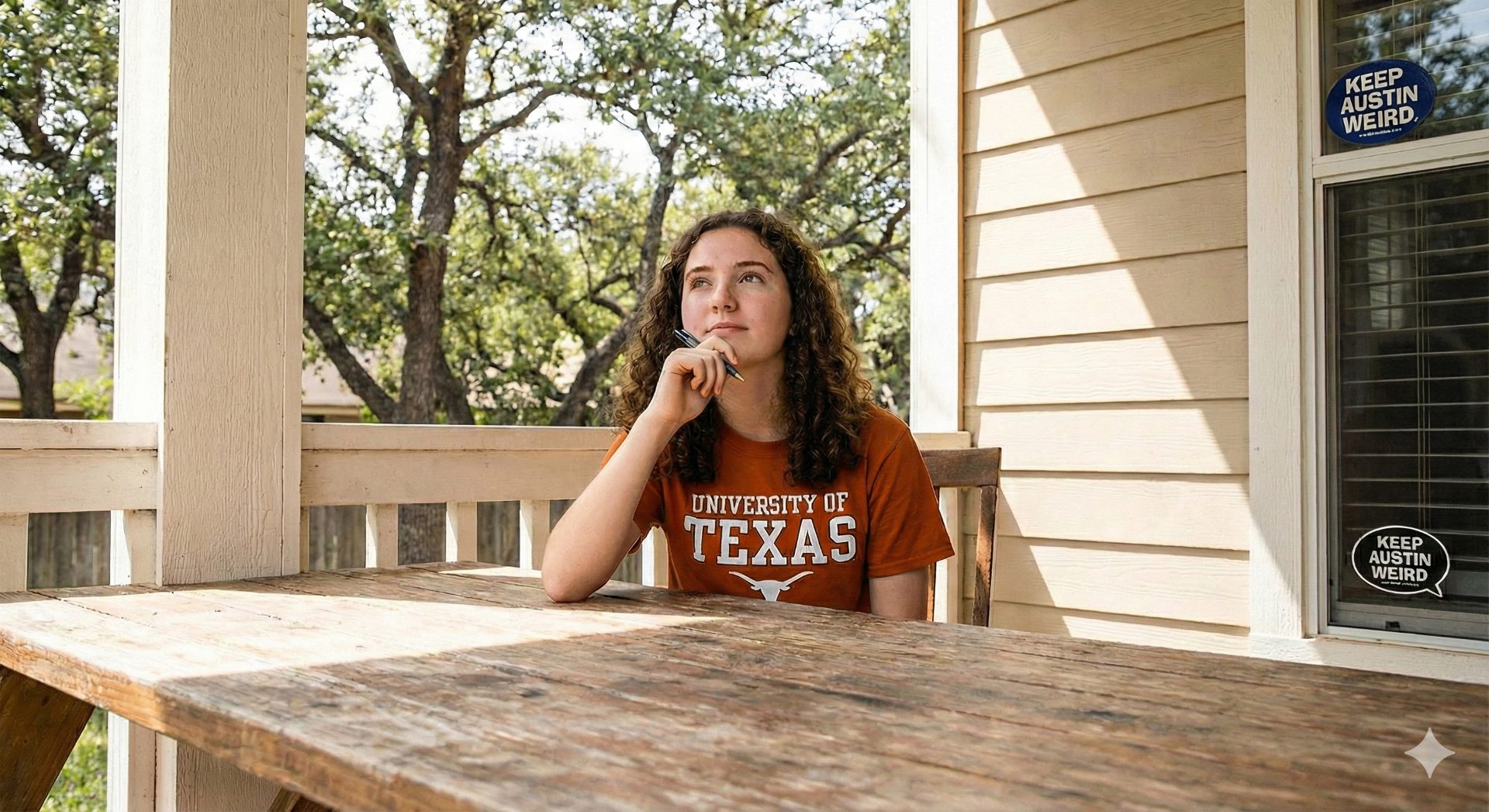
If you've followed college admissions lately, you've probably heard two stories at once:
- Colleges are worried about an "enrollment cliff."
- Top schools are reporting record-low acceptance rates.
So which is it—easier to get into college, or harder than ever?
Welcome to the demographic paradox of 2025.
What Is the "Enrollment Cliff" Anyway?
The "enrollment cliff" is the term demographers use for the sharp drop in the number of 18-year-olds in the U.S. starting around 2025–26.
It traces back to the 2007–2009 Great Recession. When the economy crashed, many families delayed or decided against having children. U.S. birth rates fell and never fully bounced back.
Fast-forward 18 years: those "missing babies" are now the high school classes of 2025, 2026, and beyond.
Projections from higher-ed demographers suggest that the number of traditional college-age high school graduates peaks around 2025 and then starts a long decline, with the population of 18-year-olds dropping over the next decade and more.
In plain terms: the pool of traditional college-bound students is shrinking—and colleges, especially smaller regional ones, are nervous. We're already seeing:
- Ongoing enrollment declines at many four-year institutions
- Campus closures and mergers at tuition-dependent colleges
On paper, it sounds simple: fewer students = easier admissions. In practice, at the most selective schools: not so simple.
The Other Side of the Story: Application Inflation
At the same time the student pool is shrinking, early application numbers keep hitting record highs.
In the last few cycles, Common App has reported:
- More unique applicants year over year
- A new record in total applications (passing 10 million)
- A higher average number of applications per student
Not long ago, many students applied to 8–10 schools. Now, especially among college-focused families, it's common to see 12–15+ applications per student.
Why the surge?
- Test-optional policies make it easier to "take a shot" at more schools.
- Years of headlines about sub-5% admit rates have made families more cautious.
- Platforms like the Common App make it very easy to add "just one more" college.
- Social media spreads stories of rejection and prestige, nudging students toward longer lists.
So we now have fewer 18-year-olds but more applications per 18-year-old. The number of seats hasn't grown much at the most famous schools, so the math at the top gets tougher.
At the Top: Record-Low Admit Rates in a Shrinking Cohort
If you're focused on the Ivies, Stanford, Duke, and similar schools, you don't feel the enrollment cliff. You feel hyper-selectivity.
Recent cycles for the Classes of 2028 and 2029 have shown:
- Overall acceptance rates in the 3–5% range at several Ivy League colleges
- Stanford hovering around 3–4%
- Duke and peer schools near 4–5% overall
At many of these campuses:
- Applications are at or near record highs.
- Class size is flat or only slightly larger.
- Some schools have brought back standardized testing, which may be raising applicant quality without shrinking the pool.
For individual students, this can feel like what some writers call a "generation of rejects," with Gen Z describing heavy levels of rejection not just in admissions but also in jobs and even personal life.
The enrollment cliff is real in the background, but demand for a small set of brands still far exceeds supply. Their challenge is not finding students. Their challenge is sorting through tens of thousands of applicants who all look very strong on paper.
Below the Top: A Scramble to Fill Seats (and the Rise of Big Merit)
Outside the ultra-selective tier, the story flips.
Regional public universities and lesser-known private colleges are on the front edge of the enrollment cliff:
- Some campuses have seen double-digit drops in enrollment
- Multi-campus systems are shrinking or consolidating
- More small private colleges are announcing closures or mergers each year
To stay afloat, many tuition-dependent private colleges are pushing "merit aid"—which is often a discount off the sticker price aimed at attracting strong students.
National surveys show record-high tuition discount rates at private, nonprofit colleges, with many schools discounting well over half of tuition for first-year students. In everyday language: at many colleges, the price you see on the website is not what most students pay.
Schools are offering larger institution-funded "scholarships" to fill freshman classes and keep budgets intact.
On top of that, some campuses have adopted aggressive recruiting moves—heavy email outreach, personalized messages, automatic application options, housing incentives, honors invitations—all designed to convert admitted students into enrolled students.
So a student might be rejected by Stanford or Yale, and at the same time receive:
- An admit plus a very generous merit package from a strong regional private college
- Priority recruiting and honors offers from a public university trying to build its class
That's the tension in action: extreme scarcity at the very top, more options (with discounts) in the broad middle.
What This Looks Like for Texas Families
Zooming in on Texas adds more nuance.
In recent years, applications from the South and Southwest—especially Texas—have grown quickly in national systems like the Common App. State policies, automatic-admission rules, and population growth in Texas have all helped keep application numbers high even as national demographics soften.
At the same time:
- Flagship and name-brand campuses (UT Austin, Texas A&M, etc.) remain very competitive.
- Some Texas community colleges and regional universities are reporting solid or rising enrollment, helped by workforce-focused programs and active recruiting.
- Others feel the demographic squeeze more sharply and are relying heavily on merit aid and scholarships to attract strong students.
For a Texas senior in 2025, this can mean:
- It may be extremely hard to get into the most recognizable names, in-state or out-of-state.
- But it may be easier than a decade ago to get strong offers from a wide range of good (if less famous) schools, especially if you're academically strong and flexible about prestige and location.
Practical Takeaways for Families
So what do you do with all of this?
1. Stop asking "Is college more competitive now?" and start asking "Where?"
The better question is: "At which kinds of colleges?" Top-20-style schools are playing a different game than regional publics and many private colleges. The enrollment cliff is hitting the middle of the market harder than the very top.
2. Build a clearly balanced college list.
For many students, that might look like:
- A small set (2–3) of ultra-selective "lottery" schools
- A solid core (4–6) of good-fit match schools you'd be genuinely happy to attend
- A real safety/financial anchor group (3–5) of schools that are likely admits and likely to offer strong merit
3. Expect application inflation—and manage it.
Yes, many classmates will apply to 12–15+ colleges. That can be fine for some students, but only if there's a plan. Each school should have a clear reason to be on the list (academic fit, money, location), not just a familiar logo.
4. Use the enrollment cliff to your advantage—carefully.
The demographic drop means:
- More aggressive merit offers at many colleges
- More willingness at some schools to revisit aid offers
But it does not mean Ivy League or Stanford suddenly became "reachable." Treat those as lotteries, not the center of the plan.
5. Protect your teen's mental health.
Ultra-low admit rates plus mass online rejection can hit hard. Framing the process as "finding good options" instead of "proving your worth" matters more than ever.
In short: the enrollment cliff is real, and so is application inflation. For your family, the opportunity lies in understanding both—and using that knowledge to build a smart, balanced, financially realistic college plan instead of getting pulled around by headlines.
Ready to Get Started?
Schedule a free consultation to discuss your student's goals and create a personalized plan.
Book Free Consultation